

Most hospitality projects start with a design brief. We think they should start with an Experience Brief.
Traditional feasibility asks: Can this be built?
We ask: What are we trying to create and what does it need to do to succeed?
Before architecture and interiors move into detailed design, we define the experience, test how it needs to work and identify the operational and commercial decisions that will shape it. So the design team starts with a clearer brief, not a collection of assumptions.
![<subject>[background image] image of office building exterior (for a mobility and transportation)</subject>](https://cdn.prod.website-files.com/685e5c5ded621a1c51a72cf6/68b981003508dc8f08165676_Screenshot%202025-09-04%20at%2012.09.46.avif)

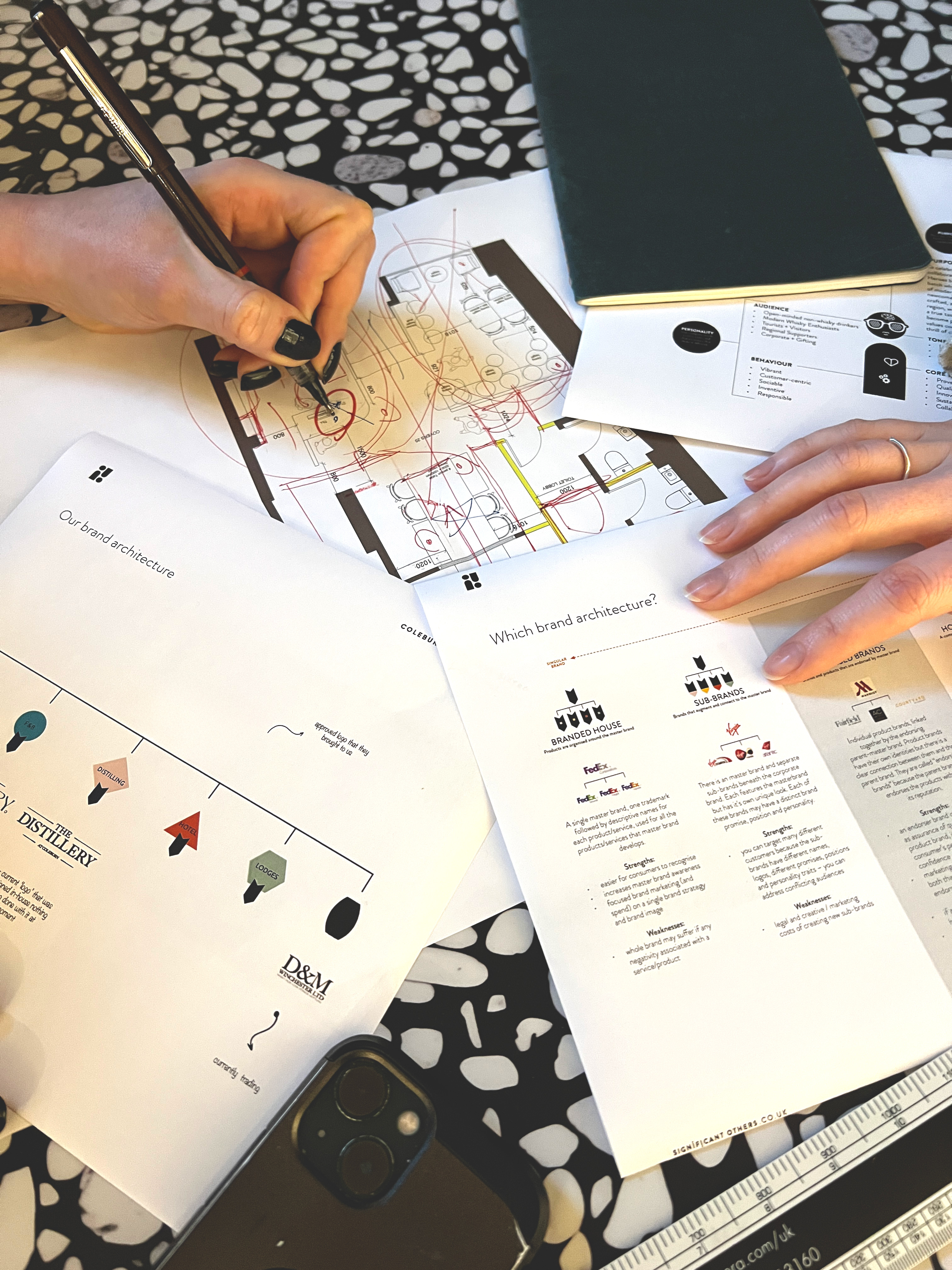
What we work out before design begins.
↓

→ Guest expectations
→ Emotional journey
→ Moments that matter
→ Desired behaviours
→ Decision points + friction

→ Operational realities
→ Brand experience
→ Capacity opportunities
→ Service principles
→ Revenue opportunities
Context → Core Idea → Experience Logic
→ Experience Brief → Delivery Readiness.

Context
We understand the audience, site, operation, commercial pressures and behavioural patterns before ideas begin.
↓
Core Story
We define what the place stands for, who it's for and what must remain true as the project develops.
↓
Experience Logic
We test how people arrive, move, pause, interact, spend and navigate. Operationally, emotionally and commercially.
↓
Experience Brief
A clear definition of the desired experience, behaviours, operational principles and commercial priorities that informs every design decision that follows.
↓
Delivery Readiness
Your architect and design team move forward with aligned stakeholders, clearer requirements and fewer assumptions left to resolve later.
The earlier you answer the right questions,
the cheaper they are to answer.
↓
Before layouts are fixed →
Test guest journeys, capacity and operational flow.
Before budgets are committed →
Know where design investment will make the biggest difference.
Before disciplines disappear down separate tracks →
Align operator, developer, architect and design team around one experience.
Before you're fixing problems on site →
Resolve assumptions while they're still drawings, conversations and decisions.
What you leave with
↓
A tested plan →
Guest journeys, capacity and operational flow tested before layouts are fixed.
Clearer investment priorities →
A better understanding of where design investment will make the biggest difference.
One aligned brief →
Developer, operator, architect and design team working from the same experience principles and priorities.
Greater confidence to move forward →
Key assumptions resolved earlier, reducing late changes, duplicated work and costly surprises.
3 - 4 Weeks. Better decisions before bigger investment.
↓

